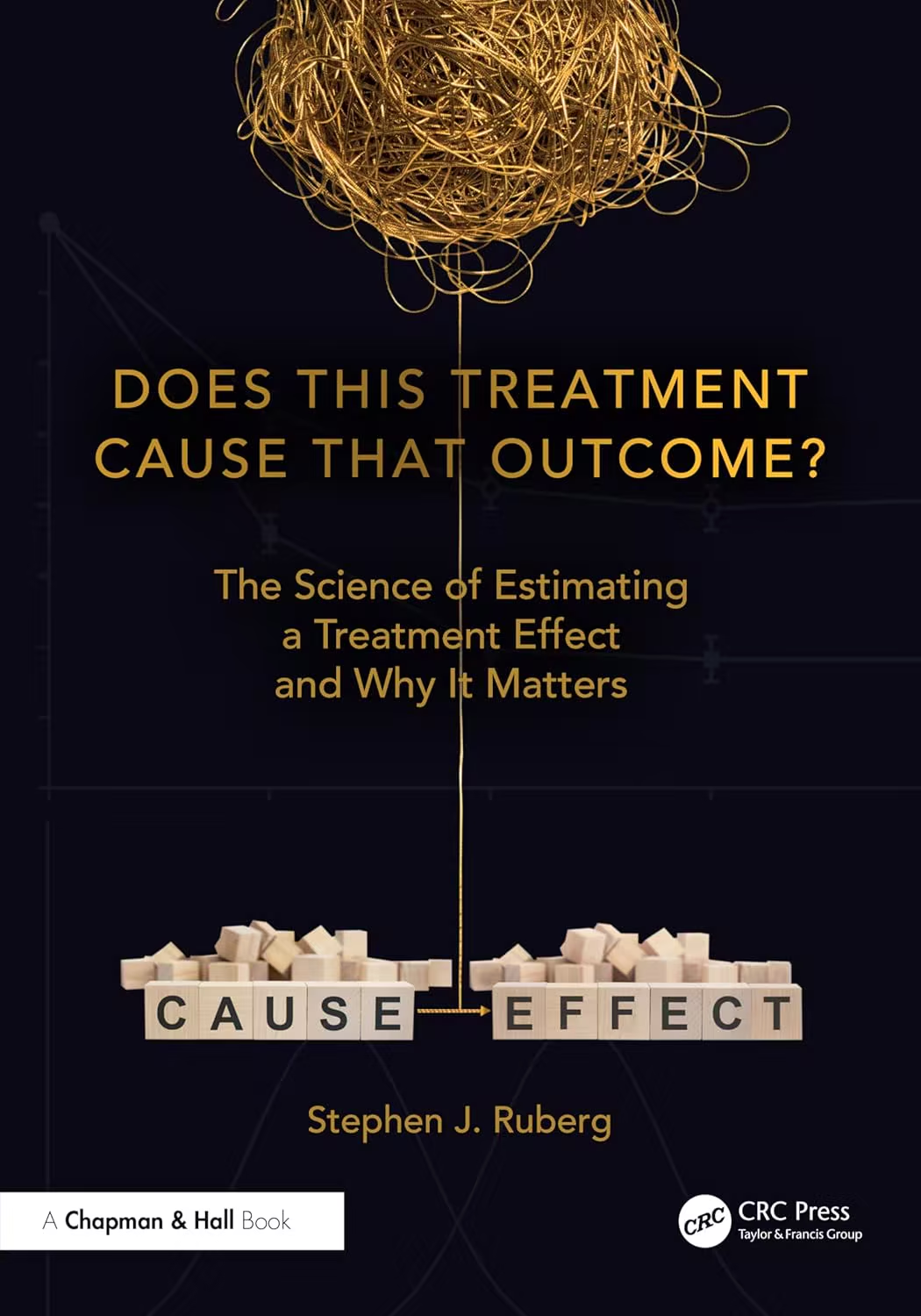
Does This Treatment Cause That Outcome?: The Science of Estimating a Treatment Effect and Why It Matters
English | 2026 | ISBN: 1041049749 | 283 pages | True PDF | 9.83 MB
This book is an engaging and insightful exploration of cause-and-effect relationships in clinical research. It begins with the foundational principles of causal inference, traces the historical evolution of randomized controlled trials, and provides a clear, comprehensive explanation of the essential elements of ICH E9(R1). The central themes of ICH E9(R1) – defining the clinical question of primary importance and establishing the estimand to answer that question – are seamlessly integrated throughout the narrative.
A standout feature is the introduction of the Tripartite Estimand Approach, a groundbreaking framework derived from patient and physician perspectives. This approach addresses the critical questions and answers needed for informed prescribing decisions. The book also outlines a stepwise, logical process for implementing the estimand framework, offering practical guidance for clinicians, statisticians, and other professionals involved in clinical drug development. By simplifying complex concepts, this book aims to make the estimand framework more accessible and actionable across disciplines. While aligned with the principles of ICH E9(R1), the book goes beyond the established guidelines, presenting bold new ideas and perspectives that enhance the understanding of estimands.
Key Features
The importance of randomization and complete data for cause-and-effect inference
A novel definition of incomplete data
A focus on the two fundamental clinical treatment effect questions underlying an estimand
A comprehensive definition of treatment attributes, including a new attribute describing the treatment effect
A simplified approach to intercurrent events (IEs)
A systematic process for defining an estimand, building on estimand attributes and strategies for handling IEs
Numerous examples spanning diverse disease states and study designs
Quick check before we show the links
Helps us keep automated scrapers from hammering the filehosts.